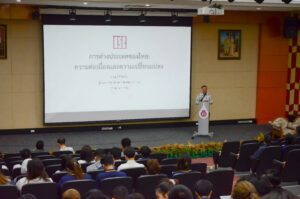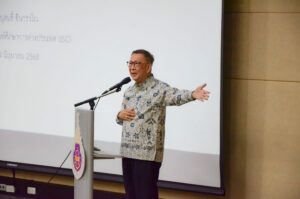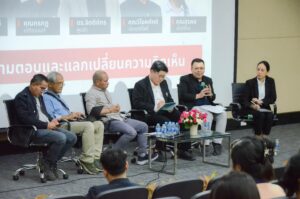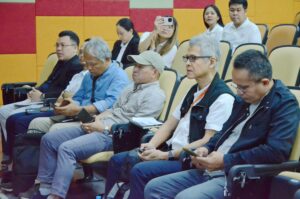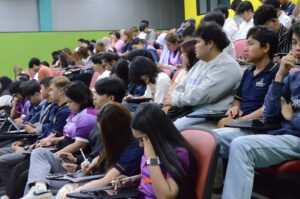
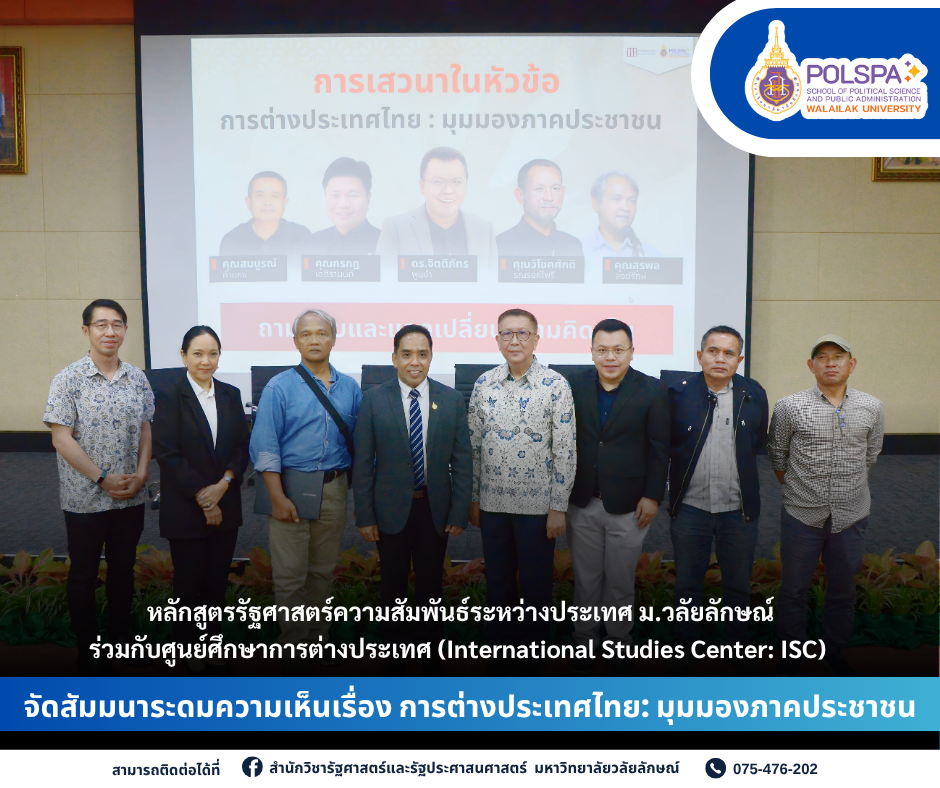
On June 24, 2025, the Political Science and International Relations Program, School of Political Science and Public Administration, Walailak University, in collaboration with the International Studies Center (ISC), Ministry of Foreign Affairs, organized a seminar on the topic “Thailand’s Foreign Policy: A Civil Society Perspective” at the Sirithammarat Conference Room, Walailak University, with over 120 participants from government, private sector, civil society, and students.
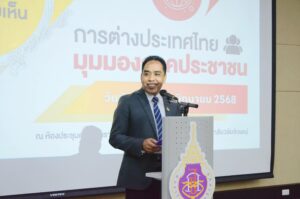
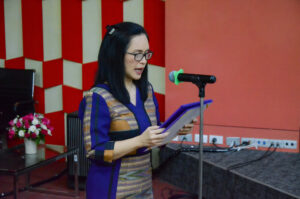
The event was honored by the presence of Associate Professor Dr. Charan Boonkhan, Vice President for Academic Affairs, Walailak University, who delivered the opening remarks. Assistant Professor Dr. Neeranut Kaewprasert Rakhungthong, Acting Dean of the School of Political Science and Public Administration, reported the objectives and significance of the event before officially opening the seminar.
The highlights of the event included special lectures and panel discussions from experts in various fields. Dr. Anuson Chinwanno, Director of the International Studies Center, gave a special lecture titled “Thailand’s Foreign Policy: Continuity and Change,” in which he presented an overview of the Ministry of Foreign Affairs’ role in using diplomacy and neutrality to foster international relations, while highlighting Thailand’s strengths on the global stage, particularly in political and trade independence, which has always attracted foreign investment.
The seminar also featured a panel discussion on the topic “Thailand’s Foreign Policy: A Civil Society Perspective,” with distinguished speakers including Associate Professor Dr. Jittipat Poonkam, Thammasat University, Mr. Korakot Tetrinant, Representative of the Nakhon Si Thammarat Chamber of Commerce, Mr. Surapol Songrak, Federation of Southern Farmers, Mr. Somboon Khamhaeng, National Coordination Committee for NGOs, and Mr. Vichoksak Ronrangkhaipree, Thai Sea Conservation Society.
The seminar aimed to promote public understanding, knowledge, and participation in foreign policy issues, providing an opportunity for students to develop analytical skills, engage in policy communication, and learn the processes of public participation in real-world issues.